Trenching in Jersey City, NJ
Trenching in Jersey City, NJ for water, sewer, electrical, and drainage lines. Trenches dug to the right depth and slope, then bedded and backfilled properly.
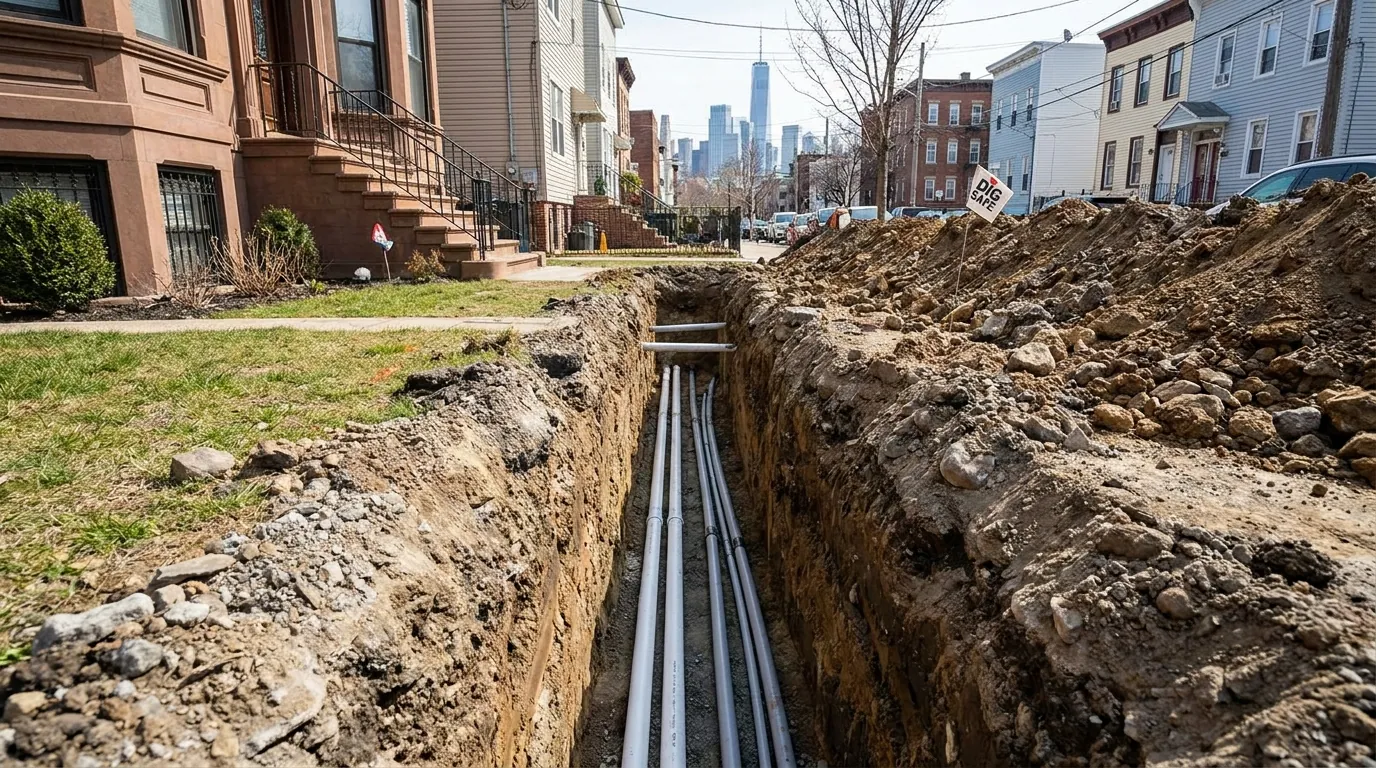
What trenching is for
Trenching is the work of cutting a narrow channel in the ground to install or repair a buried line — water service, sewer, electrical, gas, or drainage pipe. It sounds simple, but the depth, slope, and backfill all matter, and getting any of them wrong shows up later as a frozen line, a sewer that will not drain, or a trench that sinks into a rut across your yard.
You might need trenching to bring a new water or power line to a structure, to replace a failing sewer lateral, to run a line to a detached garage, or as part of a drainage excavation system. In each case the trench has to reach the right depth and, for gravity lines, hold a steady fall from start to outlet.
On many projects trenching happens alongside other site work, following site grading so the surface is set before lines go in below it.
How trenching is done
Careful trenching protects the line, the property, and the crew.
-
Locate before digging
We identify existing buried utilities so nothing gets struck. On established Jersey City lots there is often more underground than the surface suggests.
-
Set depth and slope
We plan the trench to the depth the utility requires and, for gravity lines, to a steady fall. Water lines are set below the local frost line so they do not freeze in winter.
-
Dig and shore as needed
We cut the trench to width, matching equipment to the soil and any rock, and keep the walls stable while the line is installed.
-
Bed, backfill, and compact
Lines are bedded on the right material, then the trench is backfilled in compacted layers so the surface above does not sink over the coming seasons.
How local ground changes a trench
The soil under Jersey City drives how a trench is dug. Clay is stiff and holds its walls but is slow, heavy work; sandy fill digs fast but can cave, so it may need shoring to keep the walls safe while the line is set. Rock content is the wildcard — hit ledge or buried rubble common on older parcels and the equipment and time both change. Reading the ground first is what keeps a trench predictable.
Freeze-thaw winters set a hard rule: water lines must sit below the frost line, or they freeze and burst in a cold snap. Depth is not optional here. And because the whole region gets heavy summer rain, a poorly backfilled trench becomes a channel that funnels water where you do not want it, or settles into a visible dip across the lawn. Compacting the backfill in layers is what prevents both.
Gravity lines — sewer and most drainage — live or die on slope. Too little fall and solids or water sit in the pipe; too much and water outruns solids in a sewer. Setting and holding that fall through the trench is the part that separates a line that works for decades from one that clogs.
Need a line trenched or replaced?
Tell us what line you are running and where it needs to go, and we will plan the depth, slope, and route.
Serving Jersey City and the surrounding towns.
Frequently asked questions
How deep does a trench need to be?
It depends on the line. Water service must sit below the local frost line so it does not freeze in winter, while sewer and drainage depth is set by the slope needed to reach the outlet. We plan depth around the specific line and site.
Why does the slope of a trench matter?
Gravity lines like sewer and drainage rely on a steady fall to move water and solids. Too little slope and things sit and clog; setting and holding the right fall through the trench is what keeps the line working.
What if there is rock or buried debris?
Older lots around Jersey City often hide ledge or construction rubble. We read the ground before digging and match equipment to what is there, which keeps the job from stalling on a surprise.
Will the trench leave a dip in my yard?
Not when it is backfilled correctly. Backfilling in compacted layers prevents the settling that would otherwise leave a sunken line running across the surface after a season or two.