Gravel Driveway Installation in Jersey City, NJ
Gravel driveway installation in Jersey City, NJ. Proper subgrade, compacted stone base, and a crowned surface that drains and holds up to freeze-thaw winters.
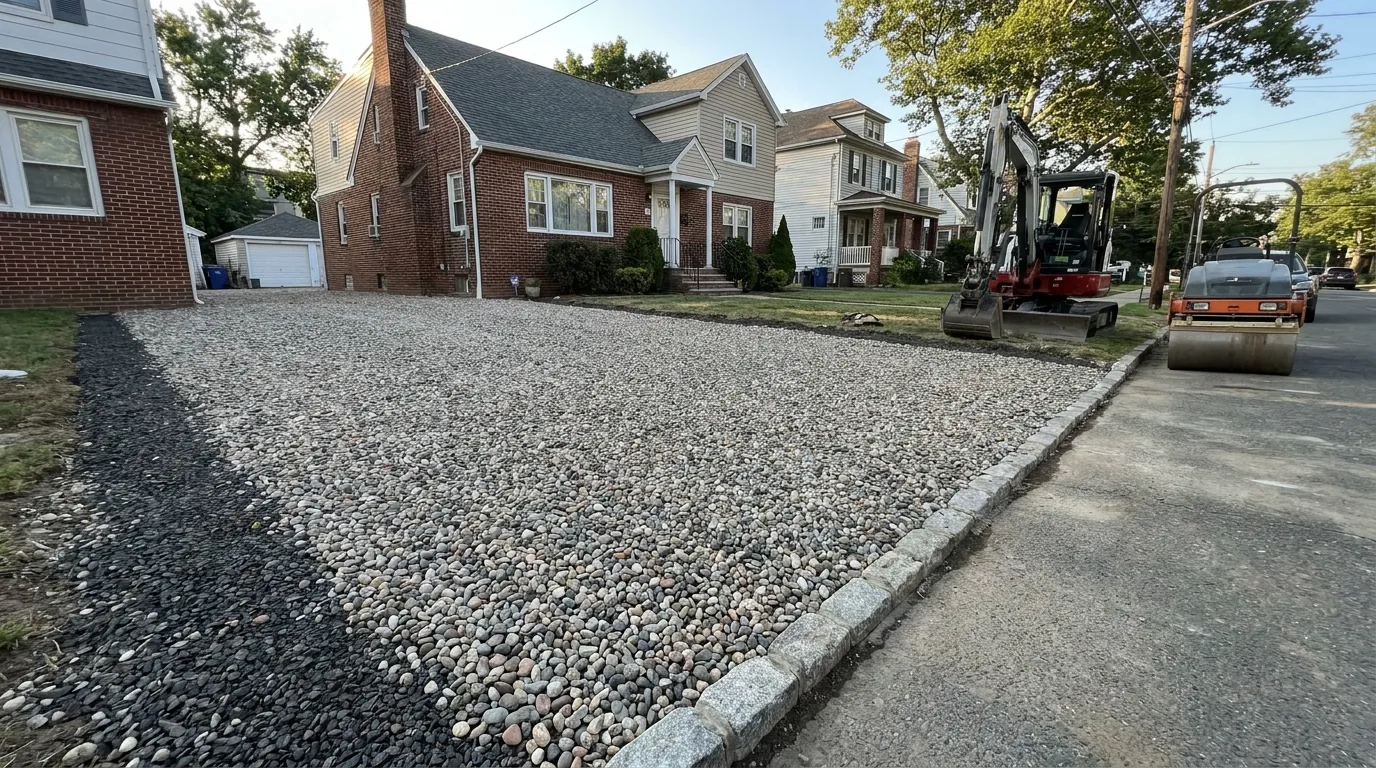
A driveway is only as good as its base
A gravel driveway looks like a layer of stone, but the part that decides whether it lasts is underneath — the subgrade and the compacted base. Skip the prep and the drive ruts, potholes, and turns to mud within a season. Build it in proper layers and it carries traffic through wet springs and freezing winters with only occasional topping up.
You might want a gravel drive for a new build, to replace a failing dirt or worn-out surface, to reach a detached garage or extra parking, or as a cost-effective alternative to paving. Whatever the reason, the work is the same: reach stable ground, build a strong draining base, set the grade so water sheds, and finish with a driving course.
Driveway work often follows site grading and, on wetter lots, ties into drainage excavation so water leaves the drive instead of sitting in it.
How a gravel driveway is built
Each layer is prepared before the next goes on.
-
Excavate the subgrade
We remove topsoil and soft material to reach stable ground, digging deeper where clay or wet spots would otherwise undermine the base.
-
Shape and compact the base
We place and compact a stone base course, building the strength and drainage that carry the driveway through wet and freezing weather.
-
Set the grade
We crown or slope the surface so water sheds to the sides rather than sitting in the driving path, since standing water is what ruts and potholes a gravel drive.
-
Place the surface gravel
We add and compact the top course to a driving surface, leaving a driveway that is easy to maintain and top up over time.
How local conditions shape the build
Soil under the driveway is the first factor. Clay-heavy ground holds water and softens, so it often needs to be dug deeper and given a thicker stone base to keep the surface from pumping mud up through the gravel. Sandy or well-draining soil is friendlier but still needs a compacted base to spread the load. Wet or low spots common on some lots near Jersey City may need drainage handled before the driveway is even started.
Freeze-thaw winters are hard on any unpaved surface. Water that sits in the base freezes, expands, and lifts the gravel, then thaws and leaves ruts and soft patches. A well-compacted, draining base is the defense — it keeps water from pooling in the structure of the drive. Humid summers bring downpours that will find any flat spot, which is why crowning the surface so water sheds to the sides is not a nicety but the thing that keeps the drive smooth.
Built this way, a gravel driveway is genuinely low-maintenance: an occasional regrade and top-up of surface stone, rather than a full rebuild every couple of years.
Want a gravel driveway that lasts?
Tell us where the drive needs to go and what the ground is like, and we will plan the base and grade.
Serving Jersey City and nearby towns.
Frequently asked questions
How thick should a gravel driveway base be?
It depends on the soil and the traffic. Clay-heavy or wet ground needs a deeper excavation and thicker compacted stone base to keep the surface stable, while firmer, well-draining soil needs less — the base is sized to the site.
Why does my gravel driveway keep getting potholes?
Almost always it is water and a weak base. A drive without a crowned, draining surface and a compacted base traps water, which ruts and potholes through freeze-thaw cycles. Rebuilding the base and grade solves it at the root.
How much maintenance does a gravel drive need?
When it is built correctly, very little — an occasional regrade and a top-up of surface gravel. Most of the maintenance problems people have come from a driveway that never had a proper base or crown to begin with.
Do I need drainage with a gravel driveway?
Sometimes. On wet or low lots, water is handled with drainage excavation before or alongside the driveway so it does not sit in the base. On well-draining ground, the crowned surface and compacted base may be enough on their own.