Site Grading in Jersey City, NJ
Site grading and land grading in Jersey City, NJ. A grading contractor shapes your lot so water drains away from structures and the ground stays stable.
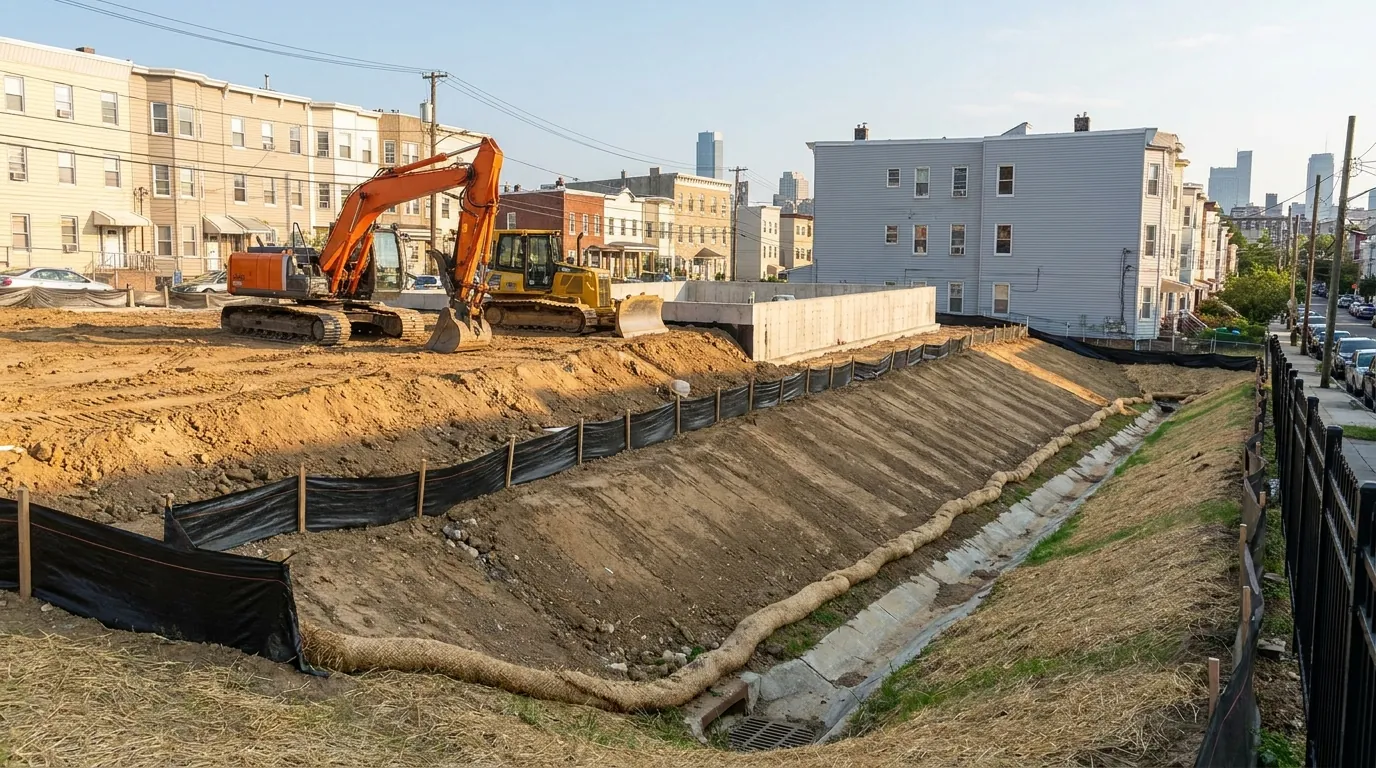
What grading does for your property
Grading is the work of shaping the ground so it drains and supports what sits on it. On a Jersey City lot, the difference between a dry basement and a wet one often comes down to whether the soil around the house slopes away from the walls or toward them. A grading contractor sets those slopes deliberately instead of leaving them to chance.
You may need site work if water pools near the foundation after rain, if a low spot in the yard stays soggy for days, if a patio or slab has started tilting the wrong way, or if you are preparing a lot for new construction, a driveway, or an addition. Each of those is a grade problem, and each is fixable when the surface is cut and filled to the right shape.
Grading is rarely a standalone job. It follows land clearing on a raw lot and often pairs with drainage excavation when the surface slope alone cannot carry water to a safe outlet.
How a grading job runs
Every lot is different, but the sequence is consistent.
-
Assess the lot and soil
We walk the property to read existing slopes, low spots, and where water currently goes, and check whether the soil is heavy clay, sandy fill, or a mix. That decides equipment and how much the surface can be cut or filled safely.
-
Set target grades
We establish the finished elevations and slope percentages needed to move water away from structures and toward a legal outlet, then mark the site so cuts and fills are controlled.
-
Cut, fill, and compact
We move material to the target shape and compact fill in layers. Loose fill settles later, so compaction is what keeps a graded pad from sinking through the first freeze-thaw season.
-
Finish and stabilize
We smooth the final surface and, where needed, protect it with seed, gravel, or another cover so a heavy rain does not wash the new grade away before it settles.
How local soil and weather change the work
Jersey City and the towns around it sit on a mix of ground — clay-heavy soils that hold water in some pockets, sandier fill in others, and made ground on older industrial parcels. Clay drains slowly, so a grade that looks fine in dry weather can trap water against a wall after a storm; sandy soil sheds fast but erodes if the slope is left bare. Reading which one you have is the first decision on any grading job.
The region's freeze-thaw winters punish loose or poorly compacted fill. Water in the soil freezes, expands, and heaves the surface, then thaws and leaves voids. A pad that was not compacted in layers will settle unevenly after that cycle, undoing the grade. Humid summers add heavy downpours that test whether the surface actually carries water to an outlet or just moves it to a new low spot.
Because of this, good grading here is about lasting shape, not just a smooth-looking surface on the day the machine leaves. When the grade cannot solve everything on its own, it works together with a foundation excavation plan or subsurface drainage.
Planning site work in Jersey City?
Tell us what your lot is doing after rain, or what you are building, and we will walk through how the ground should be shaped.
Serving Jersey City and nearby towns across the area.
Frequently asked questions
How do I know if my property needs regrading?
The clearest signs are water pooling near the house after rain, a yard low spot that stays wet for days, or a slab or patio that has begun sloping toward a structure. Any of these means the surface is directing water the wrong way and the grade should be corrected.
Can grading fix a wet basement on its own?
Often it helps a great deal, because much basement water comes from surface runoff pooling against the foundation. When the water table or subsurface flow is the cause, grading is paired with drainage excavation to carry water away below ground as well.
Why does compaction matter so much?
Loose fill settles over time, and freeze-thaw winters here speed that up. Compacting fill in layers keeps a graded pad from sinking unevenly, which would otherwise ruin the slope you paid to create.
Do you grade lots for new construction and driveways?
Yes. Grading prepares a stable, well-draining pad before a foundation, addition, or gravel driveway goes in, and it is usually one of the first site-work steps after land clearing.