Foundation Excavation in Jersey City, NJ
Foundation and basement excavation in Jersey City, NJ. An excavation contractor digs to depth and prepares stable bearing ground for footings and foundations.
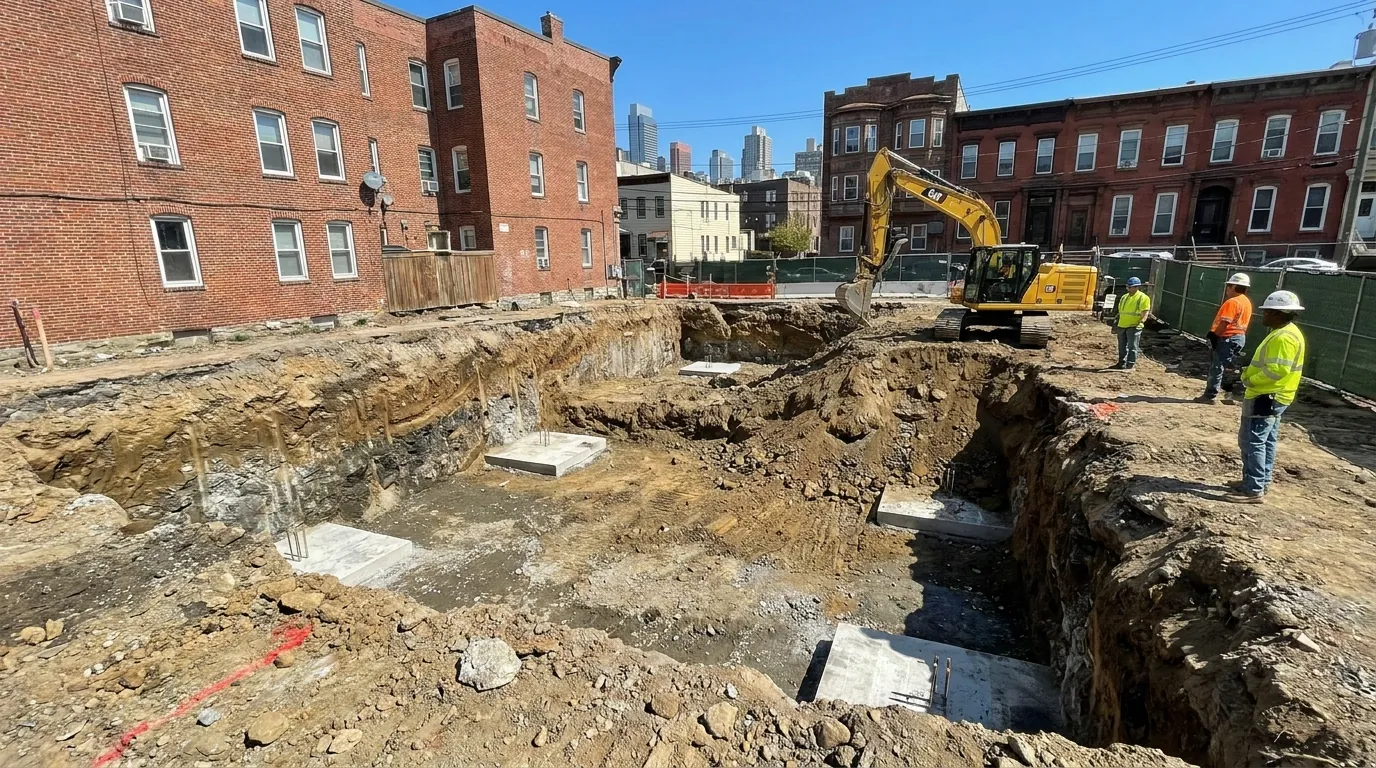
The dig that everything else stands on
Foundation excavation is the work of digging out ground for footings, a slab, or a full basement, and preparing the bearing surface so the structure sits on soil that will not move. Every new build, addition, or basement project starts here, and mistakes at this stage are the hardest and most expensive to fix later. Hiring an excavation contractor who reads the ground first is what protects the whole project.
A basement excavation contractor is not just moving dirt to a depth — the goal is to reach competent, stable soil, remove soft or organic material that would compress, and leave clean walls and a level bearing surface. If the ground under a footing settles unevenly, cracks travel up through the structure above it.
Foundation work rarely stands alone. It follows land clearing and site grading on a new lot, and it is planned hand in hand with drainage excavation so water is carried away from the walls once the foundation is in.
How foundation excavation runs
A foundation dig is methodical because there is no shortcut to stable ground.
-
Check soil and water conditions
Before digging we assess the soil and how high the water table sits, since low-lying Jersey City ground can hold water and mixed fill can bear load unevenly. This sets the depth and method.
-
Excavate to depth
We dig to the required elevations for footings or the basement floor, keeping the excavation walls stable and clean.
-
Prepare the bearing surface
We reach and compact competent soil so the foundation bears on ground that will not settle unevenly, removing soft or organic material that would compress later.
-
Set up for drainage and backfill
We leave the dig ready for perimeter drainage and, once the foundation is in, backfill and compact so water drains away rather than pooling against the walls.
Why local ground demands care
Much of Jersey City and the low-lying towns nearby sit close to the water table, and a lot of the ground is made or filled from past development. That combination is exactly what makes foundation excavation here demanding: fill can bear load unevenly, and a high water table can mean digging into wet ground that needs managing before a footing goes in. Reading these conditions is not optional; it decides the depth, the method, and how the walls are kept stable.
Freeze-thaw winters set the floor on how shallow a footing can be — it has to sit below the frost line, or heaving will lift and crack it. Meanwhile the region's heavy summer rain means water will find any low point around the foundation. That is why the dig is planned from the start to accept perimeter drainage and a proper backfill, so water is led away rather than trapped against the walls.
Get the bearing surface right and the foundation is stable for the life of the building. Get it wrong and no repair above ground fully undoes it — which is why this stage gets the most attention on any project.
Planning a foundation or basement dig?
Tell us about the project and the lot, and we will walk through soil, water, and depth before any digging starts.
Serving Jersey City and nearby towns.
Frequently asked questions
Why does the soil condition matter before excavating?
The foundation only stays put if it bears on competent, stable soil. Much of the local ground is fill or sits near the water table, so reading the conditions first decides the depth and method and prevents uneven settling later.
How deep does a footing need to go?
At minimum it must sit below the local frost line, or freeze-thaw heaving will lift and crack it. Beyond that, depth is set by reaching soil strong enough to carry the load without compressing.
What if the water table is high on my lot?
Low-lying Jersey City ground can hold water, so a high water table is managed as part of the dig and the excavation is planned to accept perimeter drainage. This keeps water moving away from the foundation instead of pooling against it.
Is drainage part of foundation excavation?
It is planned together. The dig is set up so drainage can be installed and the backfill compacted to shed water, because keeping water off the walls is a major part of a foundation lasting.